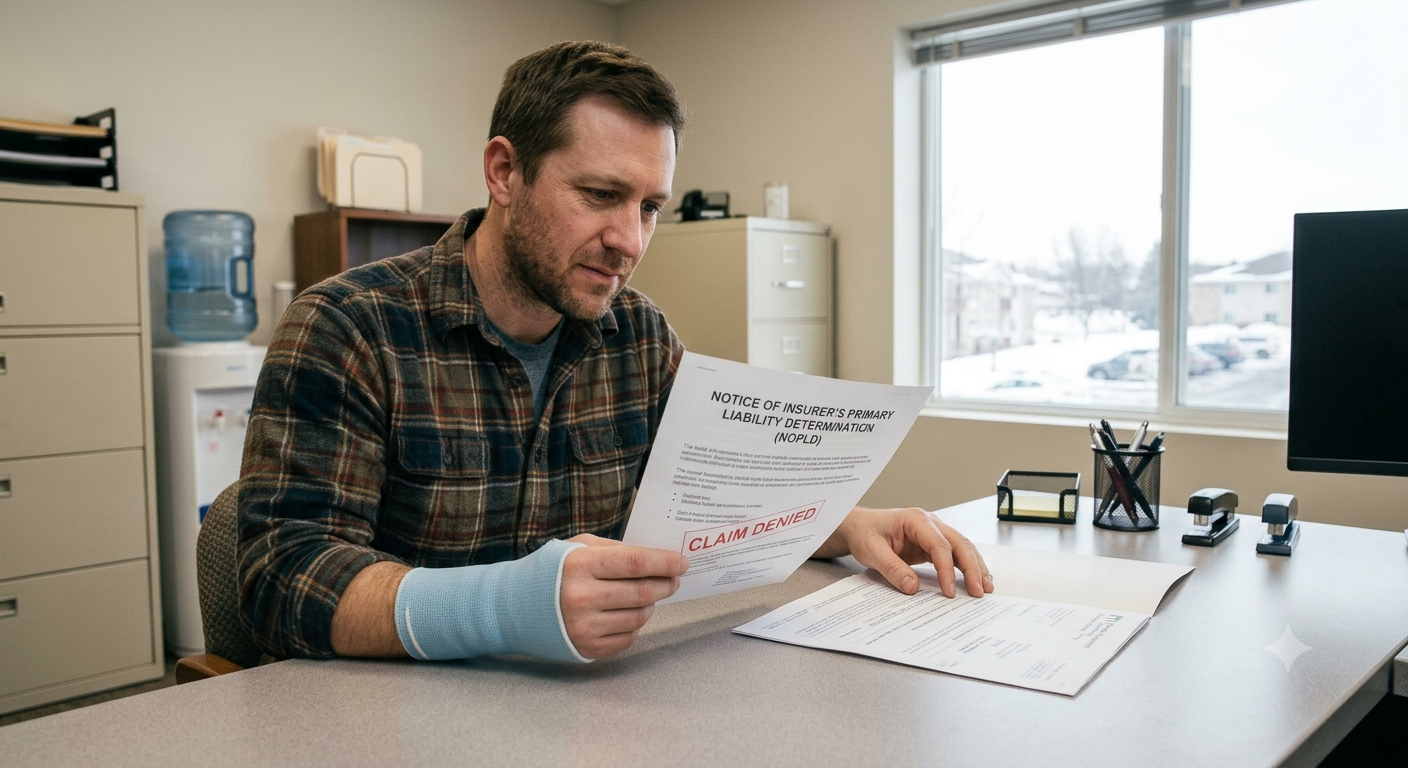
Minnesota Workers Comp Claim Denied – Now What?
A workplace injury creates substantial physical and financial stress, which escalates when an insurer denies a workers' compensation claim entirely. In Minnesota, a primary liability denial means the insurer refuses to pay any medical, wage loss, or rehabilitation benefits. While an outright denial halts immediate compensation, state law provides structured avenues to dispute the determination, secure temporary relief through secondary sources, and pursue full statutory rights.

4 Immediate Steps to Take After Receiving a Workers' Comp Denial Notice:
Every person, the details of their work, health, and life, and the characteristics of their workers’ compensation claims are unique.
Consult a Minnesota Workers' Compensation Attorney: While you are not legally required to hire a lawyer to appeal a denial, consulting one early is critical. Most Minnesota workers' comp attorneys offer free consultations and handle denial appeals on a contingency fee basis, meaning you pay nothing upfront.
Take Action to Dispute the Denial: As discussed above, Employees have the right to dispute the denial of a workers’ compensation claim. Depending on the specifics of the case, an attorney may be willing to assist with disputing the denial on the basis of a contingent fee agreement.
Utilize Collateral Sources for Immediate Relief: If denied by the workers’ compensation insurer, medical treatment may be submitted to a health insurer as secondary. Similarly, there may be secondary sources of wage loss coverage (such as short-term disability, paid medical leave, or unemployment). The Department of Labor and Industry may provide rehabilitation benefits on denied claims through its vocational rehabilitation unit. The may be a topic to request situation specific insight on when consulting an attorney.
Maintain Consistent Medical Treatment: It is unfortunately far too common that injured workers forego or delay necessary medical treatment due to workers’ compensation insurer denials. It is often the case early medical intervention leads to better outcomes. As discussed above, swiftly disputing the denial and considering collateral sources may reduce or eliminate medical treatment delays.
What Happens If a Workers' Compensation Claim is Denied?
This article is about the denial of an entire workers’ compensation claim. There are also occasions on which an insurer may admit that a work-related injury has occurred and admit liability for some benefits, but deny liability for others. There are fast, informal procedures to dispute partial denials, such as denial of a surgical procedure or discontinuance of wage loss benefits.
For various reasons, workers’ compensation claims are often denied entirely. This means that the insurer denies liability for any workers’ compensation benefits. The Employee has the right to dispute that denial. Those disputes may take time to resolve, which is discussed more fully below. In the interim, there may be other sources of coverage for medical, rehabilitation, and wage loss benefits in the short-term. Injured workers should consult an experienced workers' compensation attorney right away to protect their rights and understand their options.
Can You Appeal a Denied Workers’ Compensation Claim?
An injured worker can dispute the denial of a workers’ compensation claim. Assuming the whole claim has been denied, the injured worker (or his or her attorney) would file Claim Petition with the Court of Administrative Hearings. In general, this action will usually result in the scheduling of four appointments:
Deposition: The employer and insurer will usually hire an attorney, and that defense attorney will usually ask the injured worker some questions (in the presence of the injured workers’ attorney).
Medical Examination(s): The employer and insurer will usually choose a doctor to examine the injured worker and write an opinion about whether the injury is work-related. The injured worker or his or her attorney will usually obtain a similar opinion from the treating doctor, or a different examining physician.
Settlement Conference or Mediation: There usually will be some form of alternative dispute resolution in which the employee, employer, insurer, and their attorneys will discuss whether they can reach an agreement.
Hearing: The employee, his or her attorney, the defense attorney, and any other people that have relevant knowledge may meet with a workers’ compensation judge. After reviewing the documents given to him or her and listening to what the witnesses and attorneys say, the workers’ compensation judge can decide whether to require the insurer to pay workers’ compensation benefits.
How Often is Workers' Comp Denied?
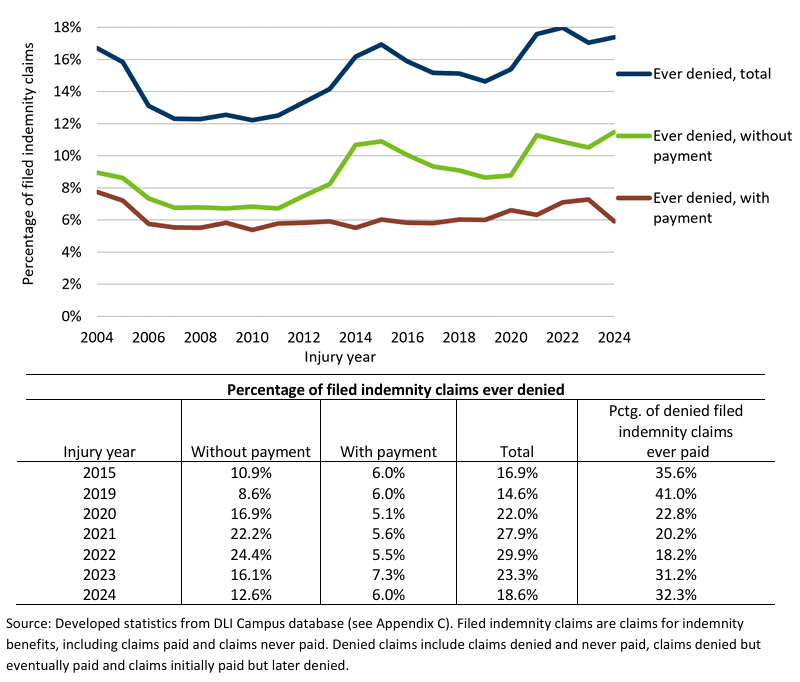
There is no reliable way to determine how often workers’ compensation claims are denied. However, it is likely that significantly more than 18.6% of claims are denied. The Minnesota Department of Labor and Industry (“Department”) periodically published a Workers Compensation System Report. According the Department’s data, 18.6% of reported claims were denied in 2024. It is notable, however, that this is the percentage of denied claims that the Insurer reported to the Department. Not all claims for workers’ compensation benefits are required to be reported to the Department. As an attorney that represents injured workers, my experience has been that it is also very common for employers and insurers not to report injuries to the Department, even when they are clearly required. In addition, it is very common for employers and insurers to simply ignore (rather than affirmatively deny) workers’ compensation claims. For those reasons, this author would expect the actual rate of denial is materially higher than the rate captured by Department of Labor and Industry data.
Conclusion
A denied workers' compensation claim does not mark the end of an injured worker's options. By filing a Claim Petition, utilizing secondary coverage options like health insurance or disability benefits, and maintaining consistent medical care, injured employees can protect their health while fighting for proper compensation. Navigating Minnesota's administrative legal system requires timely action, thorough documentation, and strategic preparation.
Frequently Asked Questions
-
Answer: Check your Notice of Primary Liability Denial (NOPLD) for the specific reason for denial and statutory deadlines. Next, submit medical bills to your personal health insurance, apply for temporary wage assistance (such as short-term disability or unemployment), and consult a Minnesota workers' compensation attorney to prepare a dispute.
-
Answer: : To formalize a dispute for an outright denial, you or your attorney must file a Claim Petition with the Minnesota Office of Administrative Hearings (OAH). This initiates a legal process that includes a deposition, independent medical examination (IME), settlement conference, and potentially an administrative hearing before a judge.
-
Answer: Yes. If a workers' compensation insurer denies primary liability, your personal health insurance becomes the secondary coverage provider. You should inform your medical providers of the denial so they can bill your private health plan, ensuring your treatment continues without interruption.
-
Answer: In Minnesota, the general statute of limitations to file a Claim Petition is typically three years from the date the employer reported the injury to the Department of Labor and Industry, or three years from the date of injury if no report was made (not to exceed six years). However, immediate action is recommended to avoid gaps in medical care and wage benefits.
About the Author
Luke Smith is a Minnesota attorney that predominantly represents employees in workers’ compensation litigation. He graduated from Mitchell Hamline School of Law in 2016 and has been practicing workers’ compensation law since 2016. He has experience representing employers, insurance companies, and employees in workers’ compensation cases. A free consultation is available to Minnesota injured workers on request. Feel free to reach out with any questions about workers' compensation benefits.